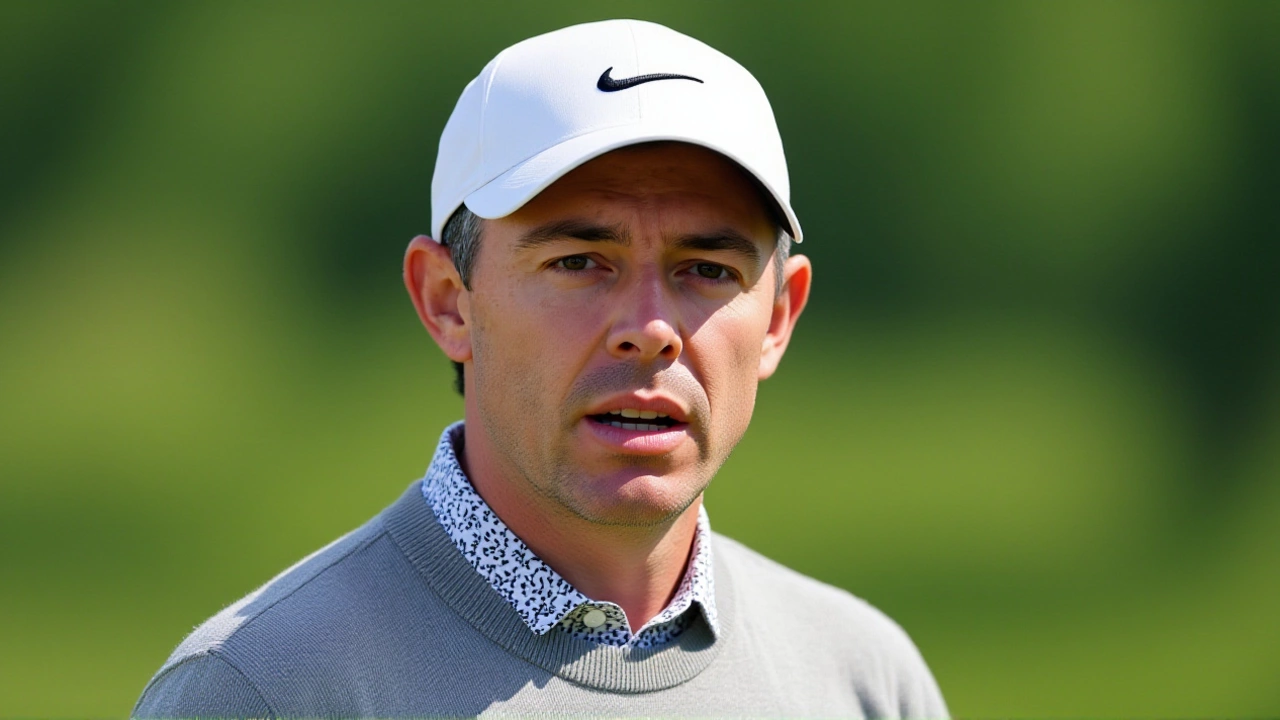
When Rory McIlroy, four-time major champion, took the microphone at his U.S. Open press conference on June 16, 2026, he didn’t mince words about the future of professional golf. The Northern Irish star called the PGA Tour’s proposed lower-tier events “glorified Korn Ferry” tournaments, sparking immediate debate over the league’s radical restructuring.
The comments weren’t just off-the-cuff remarks; they were a direct challenge to the new two-track model being pushed by PGA Tour leadership. With the U.S. OpenPinehurst Resort serving as the backdrop, McIlroy warned that historic events like the Canadian Open risk losing their prestige if they fail to meet exorbitant sponsorship thresholds.
The Two-Track Revolution
Here’s the thing: the PGA Tour is fundamentally changing how it operates. Starting in the 2028 season, the tour will split its schedule into two distinct tiers. This isn’t a minor tweak; it’s a complete overhaul designed to concentrate prize money and star power into fewer, bigger events.
Brian Rolapp, CEO of PGA Tour, first hinted at this momentum ahead of the Memorial Tournament earlier in June. His vision? A promotion-relegation system where players move between tiers based on performance. But while Rolapp sees efficiency and heightened competition, top players see a potential downgrade for many traditional stops.
Under the new structure:
- Track 1: Approximately 16 elite events with purses ranging from $20 million to $30 million. These will feature full fields of 120 players and 36-hole cuts.
- Track 2: The remaining events on the schedule, featuring lower-ranked players competing for promotion spots. Financial incentives here are significantly reduced.
The goal is to ensure the best players face each other more often. But the cost might be the soul of the mid-tier tournaments.
Why “Glorified Korn Ferry”?
McIlroy’s choice of words was deliberate. By comparing Track 2 events to the Korn Ferry Tour—the official developmental tour for the PGA—he highlighted a stark hierarchy. If an event doesn’t have the $30 million purse required for Track 1 status, it effectively becomes a secondary circuit.
“I just think there's going to be certain events that might lose their stature if a sponsor doesn't pony up $30 million,” McIlroy told reporters. “So that's the tough thing.”
He pointed specifically to the Canadian Open as a victim of this potential shift. “An event like last week, the Canadian Open, potentially going to one of these Track Twos... That's what Track Two is going to be. I don't think the Canadian Open should be one of those.”
The implication is clear: without massive financial backing, even historic majors-in-waiting could be relegated to a status akin to qualifying school. For fans who cherish the tradition of playing every week on tour, this feels like a loss of identity.
The LIV Golf Factor
But wait—there’s another layer to this criticism. McIlroy linked the current chaos directly to the rise of LIV Golf. He argued that LIV created a “false economy” by inflating prize funds unsustainably, forcing the PGA Tour to react with structural changes that may not serve the long-term health of the game.
“The old PGA Tour may have been the best format,” McIlroy suggested. The idea is that before LIV disrupted the market, the existing structure worked because it balanced competitiveness with tradition. Now, in a desperate bid to retain stars and viewership, the Tour is creating a tiered system that mirrors soccer leagues rather than traditional American sports.
This comparison adds weight to his argument. In soccer, relegation is a core part of the culture. In American golf, moving down a tier is seen as a failure or a demotion. Asking fans to accept “Track 2” events as legitimate PGA Tour stops is a significant cultural shift.
What Happens Next?
As of late June 2026, the specific list of Track 1 and Track 2 events remains unconfirmed. Reports indicate no definitive assignments have been made, leaving sponsors and organizers in limbo. Will the Canadian Open secure the necessary funding? Will other legacy events follow suit?
The timeline is tight. With implementation set for 2028, sponsors have roughly 18 months to decide if they’re willing to invest $30 million per event. Players have the same amount of time to adjust to a schedule where half the events might feel like second-class citizens.
McIlroy’s comments have amplified the pressure on PGA Tour leadership. While Brian Rolapp insists the plan has momentum, the backlash from one of the game’s biggest stars suggests the road to 2028 won’t be smooth. Fans are left wondering: will the new system save the Tour, or dilute its brand further?
Frequently Asked Questions
When does the PGA Tour's two-track system start?
The new two-track system is scheduled to begin with the 2028 season. PGA Tour CEO Brian Rolapp announced the momentum behind this change in June 2026, giving sponsors and players approximately 18 months to prepare for the transition.
What is the difference between Track 1 and Track 2?
Track 1 consists of about 16 elite events with purses between $20 million and $30 million, featuring full fields and 36-hole cuts. Track 2 includes all other events, offering lower financial incentives and serving as a pathway for players to earn promotion to Track 1 through performance.
Why did Rory McIlroy call Track 2 events "glorified Korn Ferry"?
McIlroy used this phrase to highlight the perceived drop in prestige for events that don't meet the high sponsorship threshold for Track 1. He fears that without massive prize money, these tournaments will resemble the developmental Korn Ferry Tour rather than premier PGA Tour events.
Which specific tournaments are confirmed for Track 1?
As of June 2026, no specific tournaments have been definitively assigned to Track 1 or Track 2. The PGA Tour has outlined the general framework but has not released a finalized list of events, leaving sponsors to negotiate their status.
How does LIV Golf relate to this schedule change?
McIlroy argues that LIV Golf created a "false economy" by inflating prize funds, which forced the PGA Tour to restructure its offerings to remain competitive. He believes the previous single-tier format was superior and that the current changes are a reaction to LIV's disruption.